A Glimpse into the Life and Times of the Immortal Martyr, Tayeb Haj Rezaei / Author: Ghasem Tabrizi
Who was “Tayeb Haj Rezaei,” and Why Did the Pahlavi Regime Kill Him?
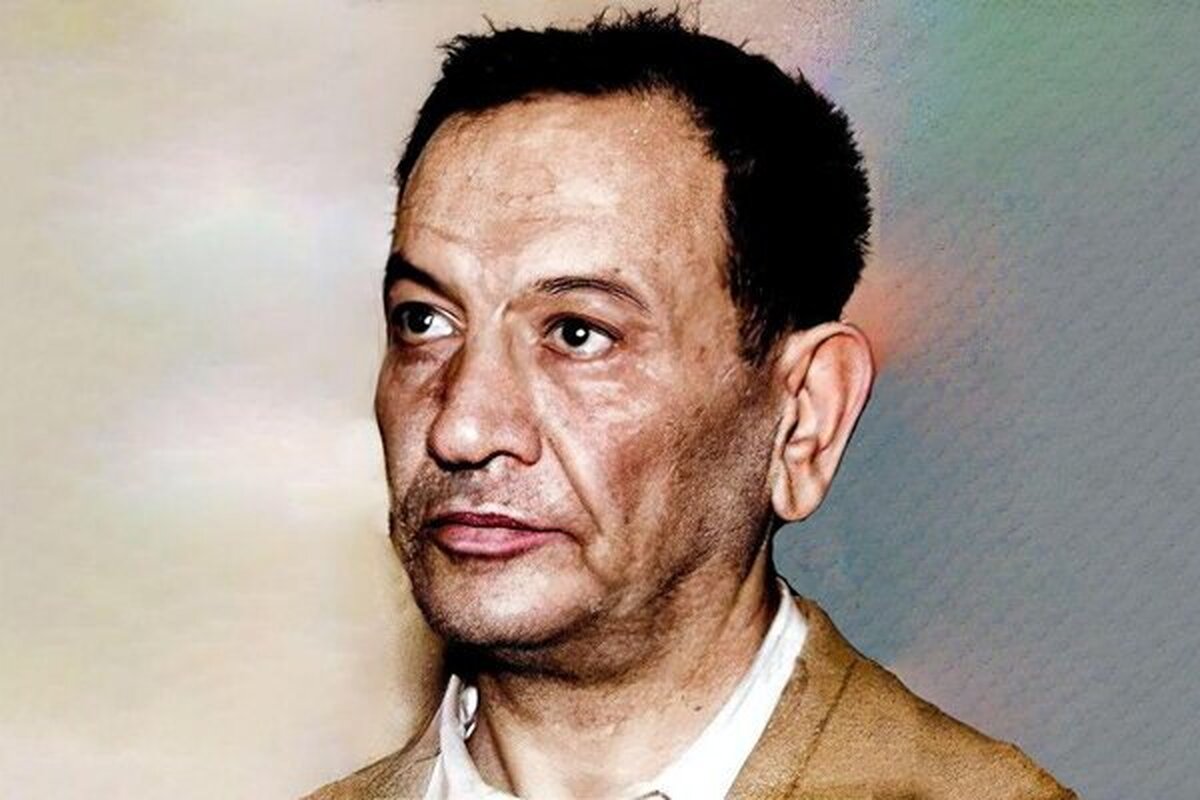
“Tayeb Haj Rezaei” was an athlete who openly expressed his affinity for Imam Khomeini (RA) starting in 1957 (1336 SH).
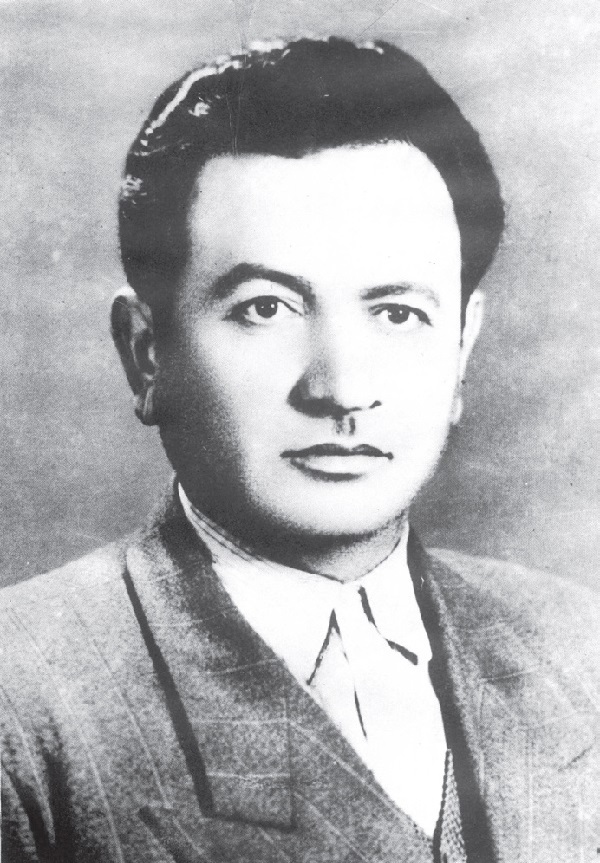
NavideShahed: The lives of ordinary people usually proceed like a quiet stream, flowing smoothly from beginning to end along a defined path, without change, upheaval, or demonstrating any inherent dynamism. However, history-making individuals clash with the existing foundations of tyranny like a mighty flood, transforming societies. By initiating a new current in the lives and spirits of the people, they engage in conflict with the oppressors, ultimately destroying them with a power drawn from the people’s spirit of freedom and the spirits that had not existed before but were ignited by the actions of these great men. His Eminence Imam Khomeini (RA) was such a figure—steady and firm, God-seeking, and never willing to compromise his Islamic ideals. He embraced hardships and difficulties wholeheartedly, and like a roaring torrent, along with the people who moved in sync with him, he managed to overthrow the foundation of the Shah’s despotism.
But this movement did not happen overnight. A regime possessing abundant material resources and complete backing from the United States, Russia, and Britain would not yield the field easily; even imagining striking a blow against it seemed impossible.
This regime was not destroyed by a simple event; rather, the historic movement of His Eminence the Imam was able to conquer the hearts of the nation and topple the Shah.
The companions of His Eminence Imam Khomeini were all people from diverse characteristics and strata: faithful and sincere individuals who, from the beginning, aimed to establish a religious government; clerics who had labored for years to expose the anti-religious nature of the monarchical regime, fought for the elevation of the word of Islam, endured prisons and terrifying black holes, and sweetened bitterness with the love of Islam. Cultural segments—teachers, students, academics, doctors, engineers—all loved Islam faithfully.
But these were only parts of the nation. The movement of Imam Khomeini succeeded in uniting the entire nation, including those who previously had no good background, who might even have worked to establish the Pahlavi regime, or those caught up in the general atmosphere of corruption such as unveiling and debauchery. The sea of Khomeini’s faith baptized them with repentance, and suddenly, they were transformed. Many achieved the zenith of honor and humanity through their sincere repentance.
This was the alchemical art of Khomeini, who could “turn dust into gold,” and we wish for “a mere glance from him.” Great men, quenched by the rain of divine mercy, joined the movement of Imam Khomeini, took the path of truth and justice, and perhaps their backgrounds might cause simple observers to miss the greatness of the transformation that occurred in their souls. Yet, the history of the Islamic Revolution, from the years 1341 to 1357 SH and subsequently during the Imposed War, is filled with sublime personalities whom human history has rarely witnessed.
Did not His Eminence Imam Khomeini initiate the “Islamic Revolution” in Iran—a country that was “princely-spoiled” and “West-struck”? The regime strived tirelessly in schools, universities, alleys, and streets to corrupt the youth. Television, radio, and art had no plan other than debasing the youth. Art festivals were organized to destroy the morals of the youth, and the press and cinemas bombarded their ethics, while immoral sales efforts worked to remove people from human and Islamic morality. The clouds, wind, moon, sun, and the firmament of the Pahlavi regime were all employed to destroy human morality. Youth and the people, naturally, are influenced by such a society, either joining it or becoming alienated.
The movement of Imam Khomeini possessed this great art: bringing forth youth from the heart of such a society who were ready to sacrifice their lives for Islam, raising young people who became famous throughout the world, sacrificing themselves for the hoisting of Islam’s flag across the globe. In this revolution, everyone who joined the movement pledged a covenant of blood with God, shielded their chests from bullets, and displayed the highest degree of sacrifice. They shed their blood in the alleys and streets of the cities so that the tree of the revolution could bear fruit.
Hearing the voice of the oppression of His Eminence the Imam and his plaintive cry of “Is there any helper to help me?” liberated the truth-seeking, God-seeking, and reality-desiring souls trapped in the bonds of despotism, guiding them to God—a movement that was the continuation of the bloody movement of Sayyid al-Shuhada (PBUH) and created many free men. These individuals, like Hurr, turned their backs on their past and manfully compensated for it with a great and mighty repentance. Was not “Hurr al-Riyahi” the symbol of freedom and manhood, and one of the most prominent figures of Karbala? Because despite possessing wealth, resources, position, and power, when he found himself at the crossroads of “mortal life” and “eternal life”—meaning “Hell” and “Paradise”—he powerfully and manfully said “No” to all of it, accepted the path of Husayn ibn Ali (PBUH), sacrificed his life on this path, and earned the honorific title of Martyr from the Imam of the Oppressed (PBUH).
The late Martyr Tayeb Haj Rezaei was similar. No one seeks to hide his past. He was one of those who helped prop up the foundations of the Pahlavi regime; however, upon hearing the voice of the idol-breaking Khomeini, he repented and joined the movement, sacrificing his life for this cause.
The Background of the Late Tayeb: Tayeb lived under the monarchy like other youth in this land, and the monarchical era meant an age of ruin, darkness, and gloom. Naturally, in such circumstances, people’s eyes do not see the realities of the world as they truly are. He was the same; strife and conflict, behavior inconsistent with Islamic teachings, were the main characteristics of the youth and people of that time. Even in the era of darkness, the late Tayeb held the light of Husayn (AS) in his heart, and his pride was serving Aba Abdillah (AS) in the Tekyehs (religious centers) and Husseiniyahs. During the days of Ashura, he organized a massive Tekyeh, inviting prominent speakers, engaging in chest-beating (sineh-zani), and mourning for Imam Husayn (AS), immersing himself in the sea of love for the Imam.
Tayeb was no exception. He also had a history of fights and altercations, for which he had been imprisoned or exiled. During the coup of August 19, 1953 (28th of Mordad 1332 SH), he was one of the most active individuals executing the CIA coup in Iran, standing alongside the army and figures like Shaban Jaafari and pro-Shah thugs, who succeeded in overthrowing Dr. Mosaddegh’s government and restoring the lost crown to the Shah.
Much has been said about the analysis of the 28th of Mordad event, but according to political analysts, internal divisions within the movement, a climate of mistrust among political leaders, exploitation of this atmosphere by enemies of the Iranian nation such as America and courtiers, and various other issues of the time were among the main factors of the coup. These very issues caused individuals like Tayeb to align with the coup plotters, being deceived by them and serving the court.
The love for Islam, especially for Sayyid al-Shuhada (AS), is intertwined with the blood of the Iranian people. Regardless of who they are or what they are, people do not easily surrender their love for Imam Husayn (AS). This was also true during the Shah’s regime; even people who outwardly lacked good conduct considered the dirge and weeping for Sayyid al-Shuhada (AS) a principle in their lives, and with this belief, they saved the country during various incidents and preserved Iran’s independence.
The late Tayeb was like this. Even during the era of darkness, he held the light of Husayn (AS) in his heart, and his pride was serving Aba Abdillah (AS) in the Husseiniyahs. During the days of Ashura, he organized a great ceremony, inviting prominent speakers, engaging in chest-beating and mourning for Imam Husayn (AS), immersing himself in the sea of love for the Imam. Tayeb’s sineh-zani procession was one of the most famous processions that moved in a sorrowful manner around Shoush Square and Khorasan during Ashura and Tasu’a, accommodating a very large crowd composed of various segments of the people. The late Tayeb himself would walk among the people with his head covered in mud and wearing black clothes, and he would offer food.
During those same days and throughout the years 1332 to 1342 SH, we witness other actions by the late Tayeb that indicate his religious spirit. For example, among SAVAK documents, we find reports by SAVAK informants mentioning his contacts with clerics, among which his connection with the late Ayatollah Kashani is prominent. Ayatollah Kashani, who was a leader of the Islamic movement during the Nationalization era, was subjected to character assassination after a disagreement with Mosaddegh and following the 1953 coup, and many who had supported him until the day before abandoned him. His Eminence the Imam said in this regard:
“Then [the colonialists] saw that if a cleric was in the field, Islam would certainly be brought into play. This was certain, and so it was; that is why they began a propaganda campaign. They created such a campaign that they put glasses on a dog and brought it from the Parliament, calling it Ayatollah. I was personally present in a gathering where the late Mr. Kashani entered—it was a eulogy gathering; no one stood up. I stood up and made room for him, one of the clerics of Tehran who is still present today. They had created this atmosphere.” (Sahifeh-ye Noor, Vol. 18, Page 182)
However, the late Tayeb, with the chivalry he possessed, did not sever his ties with the clergy and visited the late Kashani to console him. A SAVAK informant wrote: “Tayeb Haj Rezaei brought four boxes of fruit to Ayatollah Kashani’s house. [Date: 7/1/1326 SH].” And on [Date: 8/6/1337 SH], an intelligence report reached SAVAK stating: “For some time, Tayeb Haj Rezaei has changed his tone and has befriended the supporters of Ayatollah Kashani. Furthermore, during the mourning days of Muharram, Baqer Nahavandi was often present at Tayeb’s Tekyeh, especially on the Friday night of the Imam’s seventh day [17th of Muharram], where he was observed talking with Tayeb. Since Tayeb Haj Rezaei is heading to Karbala, he might be carrying a message from Ayatollah Kashani to the clerics opposing the government.”
The head of SAVAK ordered: “Complete and meticulous secret surveillance must be exercised, and the subsequent results reported.” The SAVAK agent appended to the paper, noting the importance: “I will conduct the investigation.” This is an example of the actions of the late Tayeb, who, even during the period when he was loyal to the Shah, never abandoned his deep-rooted beliefs. This recommendation of ethic scholars—never cut off your connection with God, even if it is by a hair, as it will be the means of your salvation—is visible in Tayeb’s conduct.
The Shah, in a grand spectacle called the “White Revolution of the Shah and the People,” attempted to lead the Iranian people toward complete economic, political, and cultural ruin through seemingly deceptive reforms. This move, planned by the US in many of its spheres of influence in the 1960s, was considered a primary tactic to prevent the spread of Communism. Another point was granting suffrage to women. On October 8, 1962 (16th of Mehr 1341 SH), it was announced nationwide that “according to the Provincial and City Council bill approved by the cabinet and published today, women have been granted the right to vote.” The text of this ratification removed the condition of being a Muslim for voters and candidates, and in the oath ceremony, the word “divine book” was used instead of the Quran.
Imam Khomeini, with great astuteness, opposed and struggled against these measures, viewing them as attempts to erase Islam. With deep insight into the future, he confronted this seemingly progressive ratification. In his speeches, he declared: “In a country where men are not free, speaking of women’s freedom is deceit,” or he said, “They intend to drag our girls to the barracks.”
And he explicitly stated: “We are not against progress; we are against obscenity, against these wrong actions. Do free women and free men become so by mere words?” Iranian women, like men, were captive to the bonds of the Pahlavi regime. The Shah and his father intended to turn women into cheap commodities for foreigners by freeing them from chastity and piety. Otherwise, the presence of women on the scene is not only not against Islamic teachings but is one of the primary Islamic teachings; as soon as a woman reaches the age of religious accountability, the duty of enjoining good and forbidding evil is placed upon her, which means healthy presence in the public sphere. For this reason, His Eminence Imam Khomeini created and continued his movement with the presence of men and women on the scene, leading it to victory, and while preserving the dignity of women, opened the fields of science and knowledge for them and brought them to political positions.
At that time, the Imam, with a deep understanding of the nature of the Pahlavi regime, invited the people to rise against it, and the people responded to this call. In this context, the role of individuals like Tayeb emerged. This movement, which included clerics, religious figures, and the faithful, upon reaching the liberated spirit of great men like Tayeb, aligned them with its cause and transformed them. In a great movement, Tayeb became the leader of a crowd that marched from Barfouroshan Square to protest and struggle.
Tayeb’s youngest son was born on June 8, 1963 (18th of Khordad), just three days after the great uprising of June 5, 1963 (15th of Khordad 42 SH). The late Tayeb’s decision to confront the Shah’s regime under such circumstances demonstrates the peak of his manhood and correct choice, because in such situations, ignoring money, position, status, and life requires great courage. Tayeb, unconcerned with this vital and crucial matter, joined the revolutionaries and accepted this immense danger.
This spiritual transformation and courage in decision-making can be a great lesson for many worldly seekers, so that, like Hurr ibn Yazid al-Riyahi, they may sacrifice their lives for Islam.
The Role of Martyr Tayeb in the 15th of Khordad Incident
Martyr Tayeb Haj Rezaei became one of the main agitators and was consequently sought after by the regime. The Martial Governor’s Office and its environs, headed at the time by Lieutenant General Nasiri, reported to the Shah in a special dispatch stating that Tayeb Haj Rezaei was the main agent responsible for these actions:
“According to investigations, Tayeb Haj Rezaei, a major fruit wholesaler in the grain warehouse area, was an effective agent in this incident. Since the 15th of Khordad, this individual has organized many wholesalers and residents of South Tehran, armed with clubs and batons prepared in advance, and sent them toward Shoush Square and the Bazaar. The disrupting elements carried out numerous acts of sabotage along their route, which have been duly reported to His Majesty’s royal attention.”
Despite all these statements, Tayeb Haj Rezaei denied any involvement from beginning to end, striving to evade interrogation and even attempting to portray himself as pro-Shah to avoid giving further information to the security apparatus.
Consider a portion of his interrogation on June 8, 1963 (18/3/1342 SH):
Question: Which individuals were involved in setting fire to and destroying the Jaafari Club? Have you contacted Shaban Jaafari in these past few days?
Answer: I am a friend of Shaban Jaafari myself. I have not seen him since my daughter’s wedding six months ago, and he even attended my mourning ceremony [the Muharram mourning ceremony organized by the late Tayeb].
In response to another question, he depicted all the shopkeepers in the market as indifferent to the statements issued by Khomeini so that the Shah’s security agents could not pursue those individuals.
Question: What is your general opinion on the statements issued by Khomeini and others, and what information do you have about this matter? Do you follow Khomeini’s statements or not?
Answer: I have no knowledge of the opinion of anyone in the market. Generally, the shopkeepers in the market pay no attention to Khomeini’s statements, and I myself have dedicated my entire life to the Shah. In the past few days, when His Imperial Majesty the Shah visited Sherkat-e Vahed (United Bus Company), I brought several shopkeepers from Molavi and the market to Sherkat-e Vahed to welcome the Shah, and even my daughter presented a bouquet to the Shah.
He continued by denying the participation of Hossein Ramazaniyakhi, stating:
“I am fully aware that Hossein Ramazaniyakhi also did not participate in these demonstrations. I remain and will always be a devoted servant of the Shah and am prepared to give my entire life for the Shah, and I state this without fear of anyone.”
These statements and the late Tayeb’s insistence on having no role in the 15th of Khordad incident infuriated the interrogators and leaders of SAVAK and the Martial Government. Lieutenant General Nasiri wrote to the Shah:
“Although Tayeb outwardly denies these accusations and names several other fruit wholesalers, including Hossein Shamshad, Hossein and Abbas Gardi, Habib Qomi, Seyed Ali Kashi, Haj Ali Tavassoli, Mohammad Zoghi, and Mohammad Qomi, as the main agitators, existing evidence and reports indicate that the primary agent was Tayeb Haj Rezaei himself. The dispatch of a number of people from Varamin to Tehran was also carried out according to Tayeb’s recommendation and the actions of his affiliates there. Among this group, Tayeb Haj Rezaei, Hossein Shamshad, and Ali Siri, known as Palang-e Darreh, have been arrested by agents of the Martial Government, while the others are currently at large, and efforts are underway to apprehend them.”
Due to the late Tayeb’s staunch resistance, the regime staged events in Tehran, attempting to incite a hostile movement against Tayeb by mobilizing a group of ordinary prisoners at night. Among the SAVAK documents, we find reports where SAVAK informants mention the issue of contact with clerics, highlighting the connection with the late Ayatollah Kashani. After his disagreement with Mosaddegh and following the 1953 coup, the late Ayatollah Kashani was subjected to character assassination, and many who had supported him until the day before abandoned him. However, Tayeb remained by his side. The late Tayeb Haj Rezaei sitting with his son Asghar, second and third from the right. Amin-ol-Sultan Market. From the left: Tayeb Haj Rezaei (second), Abdollah Ezzatollah (third), Taher Haj Rezaei (fourth).
They sought revenge on him to crush his resistant morale or force him to surrender. When this yielded no results, they sent him to solitary confinement to inflict psychological blows upon him in isolation.
Captain Mehreri, the head of the temporary detention center, wrote in a report titled “Prisoner Demonstrations and Mass Attack Against Tayeb Haj Rezaei”:
“Respectfully submitted, at 22:30 on 22/3/1342 SH, a massive crowd, uproar, and noise suddenly erupted in Ward 2 of this prison, which mostly housed the disruptors of the 15th of Khordad incident. Upon being informed, I, Captain Mehreri, immediately proceeded into the aforementioned ward along with the available security officers and observed that a large number of prisoners in that ward, along with other prisoners involved in the same incident, were staging severe demonstrations against a prisoner named Tayeb Haj Rezaei, chanting slogans such as, ‘Death to the vampire Tayeb… We must destroy this murderer and criminal…’ Immediately, the prisoners, who were extremely agitated by this event, were taken out of the ward, and Tayeb was moved to solitary confinement for his safety, as it was certain he would suffer severe physical harm. He is being held there individually, and the incident has been officially recorded.”
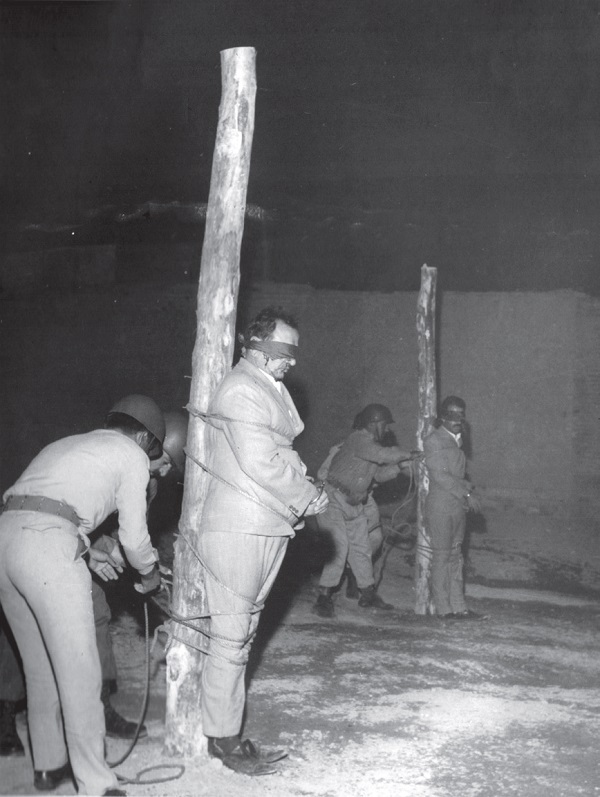
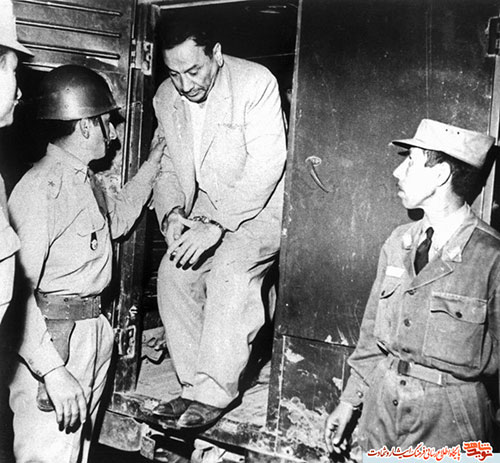
But Tayeb, having been quenched by the overflowing grace of the idol-breaking Khomeini and living in the hand of God, resisted all these injustices, stood firm like a man, and refused to deviate from the new path he had chosen or take a position against the Islamic Movement. For this reason, on July 18, 1963 (27/4/1342 SH), he was brought before the court with an indictment drafted by the Army Prosecutor, Colonel Ahmad Dolu Qajar. In the indictment, the late Martyr Tayeb Haj Rezaei was listed as the primary defendant, and the death penalty was requested for him. Ultimately, the military court sentenced him and Haj Esmaeil Rezaei to execution, and the sentences were carried out on November 2, 1963 (11/8/1342 SH).
The execution of this sentence was presented as a means of suppressing the remaining freedom-seekers and was immediately published joyfully with large headlines in state-run newspapers, with the news of the execution reaching the entire country. The advertising designers expected that the people would be frightened by this action and align with the Pahlavi regime. However, this propaganda had a negative effect on the people, according to SAVAK’s own admission, and provoked public sentiment against the Shah’s regime.
A report prepared by a special agent on November 6, 1963 (15/8/42 SH), stated:
“The execution of Tayeb Haj Rezaei, along with the sensational reporting published with exaggeration and distressing photos in Kayhan and Ettela’at newspapers, had a negative effect among the people.”
Members of the National Front were propagating among the people that Tayeb and Rezaei were key pillars in organizing large gatherings in favor of the Shah, having sent thousands of people from South Tehran to the city center, but they finally received their reward.
Radical clerics, religious zealots, and bazaar merchants stated that the Shah’s main objective was to eliminate religion, and all actions taken in the last two years aimed at weakening the clergy and destroying religion. The killing of Tayeb and Rezaei, who rose up for a religious cause, was also intended to deter others from daring to defend religion.
This information spread rapidly among the common people in Tehran and the provincial towns. The photos and articles in Kayhan and Ettela’at showed the people the statements of Tayeb Rezaei, introducing them as martyrs of religion, and it was said that all the sins committed by these two men in their youth were forgiven.
Yes, the Shah’s regime gained nothing from such an action but shame and disgrace, and those dear martyrs joined the caravan of the free men martyrs of Islam, and their position in the hearts of the Iranian nation became eternal.
Biography Summary: Tayeb Haj Rezaei, son of Hossein Ali, born in 1901 (1280 SH), was engaged in buying and selling fruits and vegetables in the produce market and was a famous market figure from the 1940s to 1963 (1320 to 1342 SH). He had two wives; one named Mrs. Fakhr-ol-Sadat, from whom he had two children. His second wife, Mrs. Fakhri, had five children with him.
In his youth, he was not a person of good standing and participated in various altercations. For example, in 1937 (1316 SH), he was sentenced to two years in solitary confinement on charges of fighting with municipal police officers. In 1940 (1319 SH), he was prosecuted for a dispute and released on bail. In 1943 (1322 SH), he was sentenced to five years of hard labor. In 1944 (1323 SH), he was exiled to Bandar Abbas by a cabinet decision. In 1953 (1332 SH), he was among the plotters of the 28th of Mordad coup and was considered a staunch supporter of the Shah. However, due to a spiritual transformation, he joined the Islamic Movement and was among those who fought for Imam Khomeini, resulting in his arrest and martyrdom.
May his soul rest in peace and his path be followed.
Footnotes:
The Bloody Uprising of the Fifteenth of Khordad – Page 194
Dehnavi, The Bloody Uprising of 15 Khordad 42 in the Light of Documents – Published by Rasa Cultural Services Institute, 1360 SH, Page 195
Source: Yadman-e Shahid Tayeb Haj Rezaei / Issue 68 / Tir 1390 (July 2011)